
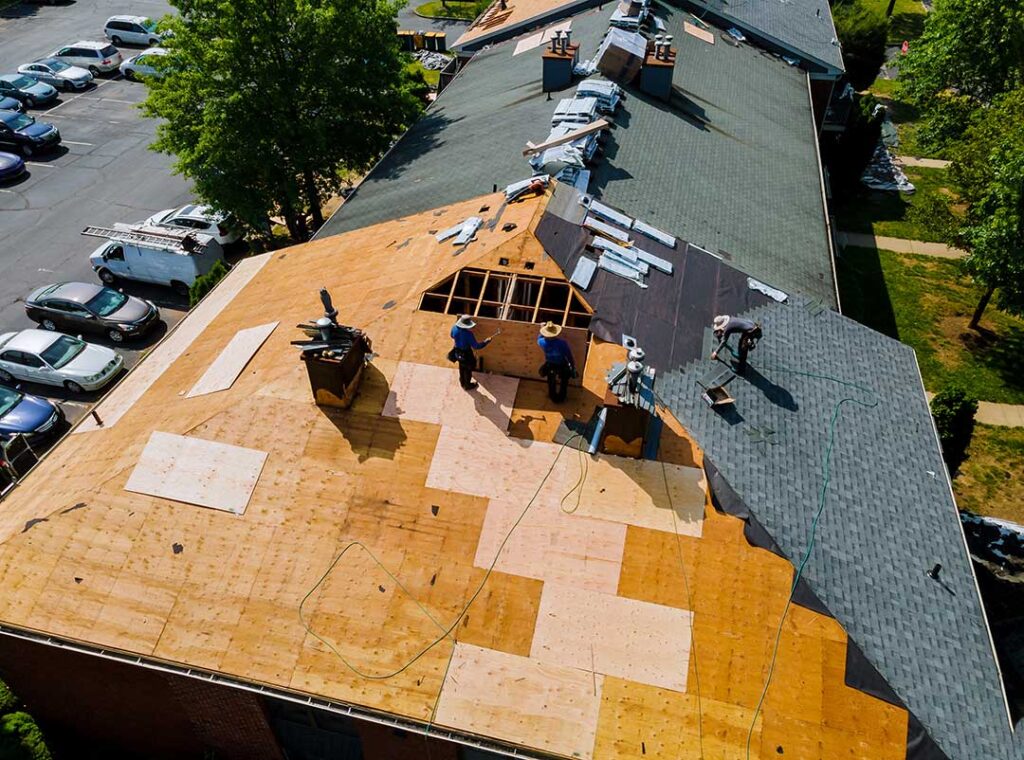
A roof cricket is a raised, sloped structure built behind a chimney or another roof obstruction. Its job is to divide and redirect rainwater, melting snow, and ice around the obstruction so water does not collect against the uphill side.
Although a cricket may look like a small secondary roof, it is actually part of the roof drainage and flashing system. A properly designed cricket can reduce moisture problems, but a poorly built or damaged one can become a source of leaks.
What does a roof cricket look like?
A cricket usually has a peaked or ridge-like shape. The high point is positioned behind the obstruction, and the sloping sides guide water toward the left and right portions of the roof.
The structure may be framed with wood and covered with roofing materials, or it may be formed as part of a low-slope roofing assembly. Its exact appearance depends on the roof design, the size of the obstruction, and the type of roofing installed.
A cricket is commonly found behind:
- Masonry chimneys
- Large plumbing or mechanical roof penetrations
- Raised roof sections
- Wide skylights or similar obstructions
- Certain wall-to-roof intersections
A smaller, less pronounced raised feature is sometimes called a saddle. The terms are often used interchangeably in everyday conversation, although design professionals may distinguish between them based on size and shape.
Why is a cricket needed behind a chimney?
A chimney interrupts the natural path of water moving down a roof. Without a cricket, rain and melting snow can flow directly into the vertical wall of the chimney and collect along its uphill side.
That area is vulnerable because it includes several materials and joints:
- Roofing shingles or membrane
- Chimney masonry
- Sheet-metal flashing
- Counterflashing or mortar joints
- Roof sheathing beneath the surface
The cricket creates a sloped transition that pushes water away from the chimney. Instead of allowing water to sit in a pocket, it directs drainage around both sides of the obstruction.
This matters particularly on roofs with moderate or low slopes, where water and snow move more slowly. A wide chimney can also create a larger area where debris, ice, and moisture accumulate.
How does a cricket help during winter?
In Watervliet, NY, winter conditions can make roof drainage problems more severe. Snow can remain on a shaded roof, melt during warmer periods, and refreeze when temperatures drop. This repeated cycle can place stress on flashing and roofing materials.
A cricket helps by reducing the flat or nearly flat area where snow and ice can gather directly behind an obstruction. Its slopes provide a path for meltwater to move away instead of remaining trapped against the chimney.
A cricket does not prevent every ice dam. Ice dams are also affected by attic insulation, air leakage, ventilation, roof shape, weather exposure, and indoor humidity. However, a well-drained area behind a chimney is less likely to hold standing water for long periods.
Snow should not be assumed to slide off a cricket automatically. Deep or compacted snow may remain in place, and removing snow from a roof can be hazardous if done improperly.
Does every roof need a cricket?
No. Whether a cricket is needed depends on the obstruction, roof slope, roof size, drainage pattern, and local construction requirements.
A small chimney on a steep roof may shed water effectively with properly installed step flashing, back-pan flashing, and counterflashing. A wide chimney on a lower-slope roof is more likely to benefit from a cricket because it creates a larger drainage obstruction.
The key issue is not simply whether a chimney has a cricket. The larger question is whether water and snow can move safely around the obstruction without entering the roof assembly.
A cricket may be especially useful when:
- The chimney is unusually wide
- The roof has a low or moderate slope
- Water collects behind the chimney
- The chimney sits near a roof valley
- The roof has a history of leaks in that area
- Snow and ice regularly build up on the uphill side
Construction rules can vary by roof design and jurisdiction. A roof alteration may also need to meet requirements for structural support, flashing, fire separation, and weather protection.
What happens if a cricket is missing or poorly built?
The most common result is water concentration behind the obstruction. Over time, that can lead to deteriorated flashing, damaged sheathing, wet insulation, stained ceilings, or weakened framing.
A poorly designed cricket may create problems of its own. For example, it may have inadequate slope, undersized flashing, exposed fasteners, weak seams, or a drainage path that sends water toward another vulnerable roof area.
Common warning signs include:
- Water stains on ceilings or upper walls
- Damp insulation near the chimney
- Peeling paint or soft drywall
- Rusted or displaced flashing
- Cracked mortar near the roof line
- Shingle granules collecting below the chimney
- Moss or dark staining in a persistently wet area
- Ice buildup that repeatedly forms behind the chimney
- Visible ponding after rain
A leak may not appear directly below the cricket. Water can travel along roof decking, rafters, insulation, or interior framing before becoming visible indoors.

How is a roof cricket connected to flashing?
The cricket and flashing must work together. The cricket directs water, while flashing creates water-resistant transitions between the roof and the obstruction.
A typical chimney area may include:
- Step flashing along the sides
- A back-pan or cricket flashing at the uphill side
- Counterflashing set into the chimney masonry
- Apron flashing along the lower side
- Roofing materials integrated around the metal
Flashing should overlap in a way that follows the direction of water flow. Sealant may be used as part of a complete system, but sealant alone is not a substitute for correctly layered metal flashing.
Masonry movement, freeze-thaw cycles, wind, and roof aging can all affect these joints. A repair that covers only the visible leak may not correct the drainage or flashing problem that caused it.
Can a roof cricket be added to an existing roof?
Often, yes, but adding one is more involved than placing a raised wedge behind a chimney. The roof covering generally must be opened, the supporting structure evaluated, and new flashing integrated with the existing materials.
The design also needs to account for:
- Roof framing and load paths
- Chimney dimensions and position
- Existing roof slope
- Roofing material and installation method
- Snow accumulation
- Water discharge points
- Ventilation and insulation near the work area
On an older home, hidden damage may be discovered when roofing materials are removed. Moisture can weaken roof sheathing or framing even when the interior ceiling looks normal.
Because work around chimneys involves height, masonry, flashing, and weather exposure, evaluation or construction may require a qualified building professional, especially when structural damage, active leaks, or extensive snow and ice are present.
How can homeowners check the area safely?
A ground-level inspection can reveal useful clues without requiring anyone to climb onto the roof. Look at the uphill side of the chimney after rain or during safe observation from a window or nearby ground location.
Check for:
- Water collecting behind the chimney
- Missing or bent metal flashing
- Gaps where metal meets masonry
- Loose chimney mortar
- Damaged roofing materials
- Heavy debris trapped against the chimney
- Repeated ceiling stains in the same area
Avoid walking on a snow-covered, icy, steep, or visibly damaged roof. Do not chip away at ice with sharp tools, since that can damage shingles, membranes, flashing, and the roof surface.
A roof cricket is a relatively small feature, but it performs an important drainage function. Its value comes from the complete system: correct slope, sound framing, properly layered flashing, intact roofing, and a clear path for water to leave the area.
